
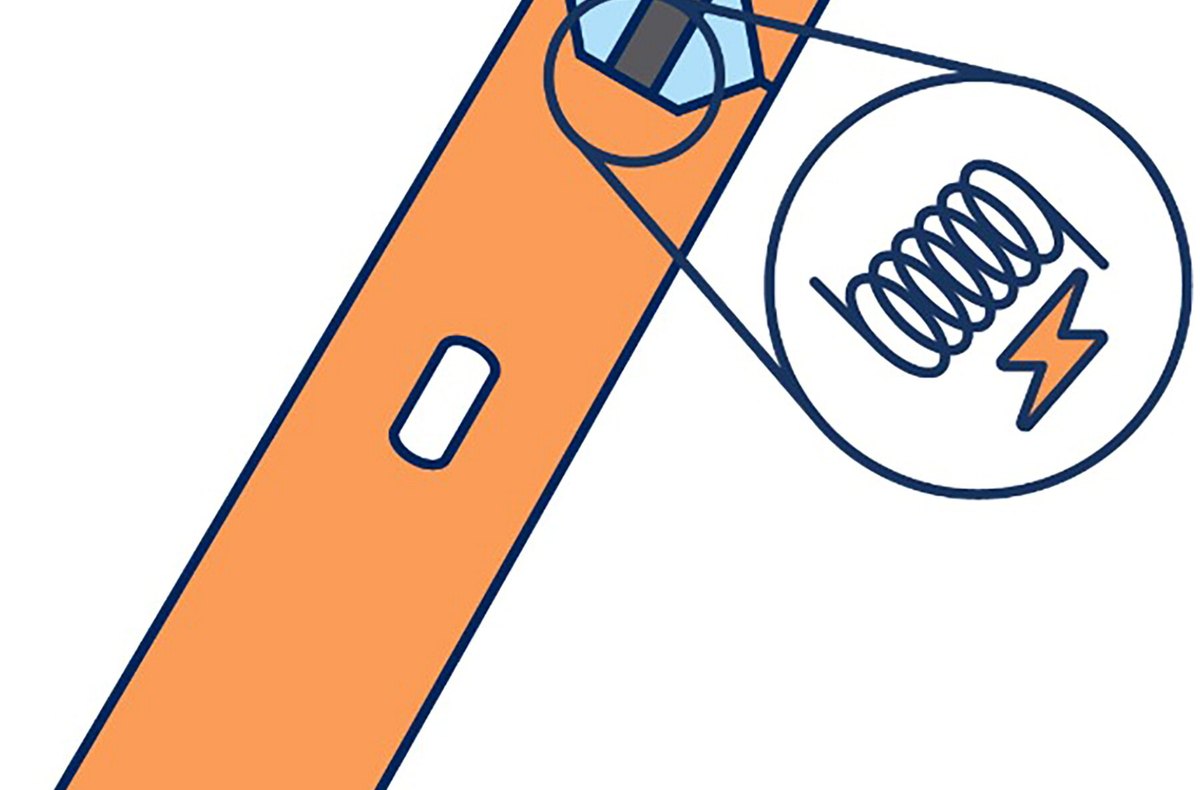

A mesh coil uses a perforated strip or grid as its heating element. A traditional coil uses resistance wire formed into wraps. Both heat liquid held in a wick; the difference is the shape of the metal touching that wick.
Mesh spreads heat across a larger area
The broad, flat surface of mesh can contact more wick than a narrow round wire. Manufacturers use that area to create coils that heat quickly and manage higher output without concentrating all the heat in a few small points.
That can support a more even result, but the complete coil design still matters. Poor wick contact, unsuitable power, or thick liquid can make a mesh coil perform badly.
Round wire still makes sense at low power
Traditional wire coils remain common in lower-power MTL setups. They are compact, predictable, and can work well where a large mesh surface would require more power than the device is designed to deliver.
Do not treat mesh as a quality grade. It describes construction, not the accuracy of the seals, cotton, contacts, or manufacturing.
Compare the numbers that affect ownership
When choosing between compatible options, check:
- Recommended wattage
- Intended draw style
- Suggested e-liquid ratio
- Replacement price and pack size
- Availability from reliable sellers
- Whether the coil fits your exact pod version
A mesh option may use more liquid or battery power if it is designed for warmer, larger puffs. A higher-resistance wire option may feel more restrained but cost less to run.
Flavor claims require real use
Product pages often describe mesh as delivering better or more consistent flavor. Surface area provides a technical reason it can heat a wick differently, but flavor is also affected by liquid, airflow, power, and the specific design. Specifications alone cannot prove that one compatible coil will taste better to you.
Which should you choose?
Choose based on the coil's intended power and draw, not the mesh label. If your device supports both, start with the option closest to your current airflow and liquid. Change one variable at a time so the comparison means something.
See coil resistance explained for the other number printed beside the coil name.