
Freebase and nicotine salt are two forms of nicotine used in e-liquid. Nicotine-salt liquid is made by combining freebase nicotine with an acid that lowers the mixture's pH. This usually allows higher labeled strengths with less throat harshness than comparable freebase liquid.
Nicotine is addictive. The label strength and the amount of vapor produced both matter, so a liquid should be matched to the device rather than chosen by name alone.
Freebase is common at lower strengths
Freebase liquid is widely sold in lower strengths for devices that produce more vapor per puff. At higher concentrations it generally creates a stronger throat sensation.
That does not mean freebase requires a large device. Check the bottle ratio, strength, and the hardware maker's guidance.
Salt liquid is common in compact pods
Nicotine-salt liquid is often paired with lower-power MTL pods that create less vapor per puff. The smoother throat feel can make high strength easy to underestimate. Do not place a high-strength liquid into a powerful DTL setup merely because the bottle fits.
Device output changes the comparison
A small pod and a high-output tank deliver very different amounts of aerosol. Coil resistance, wattage, puff length, and frequency all affect use. The same labeled strength can feel very different across two devices.
Do not compare strength by percentage alone without checking the units. For example, a label may use percent while another uses milligrams per milliliter; use the manufacturer's stated conversion.
Read every label
Check:
- Nicotine type
- Strength in mg/mL or percent
- VG/PG ratio
- Manufacturer device guidance
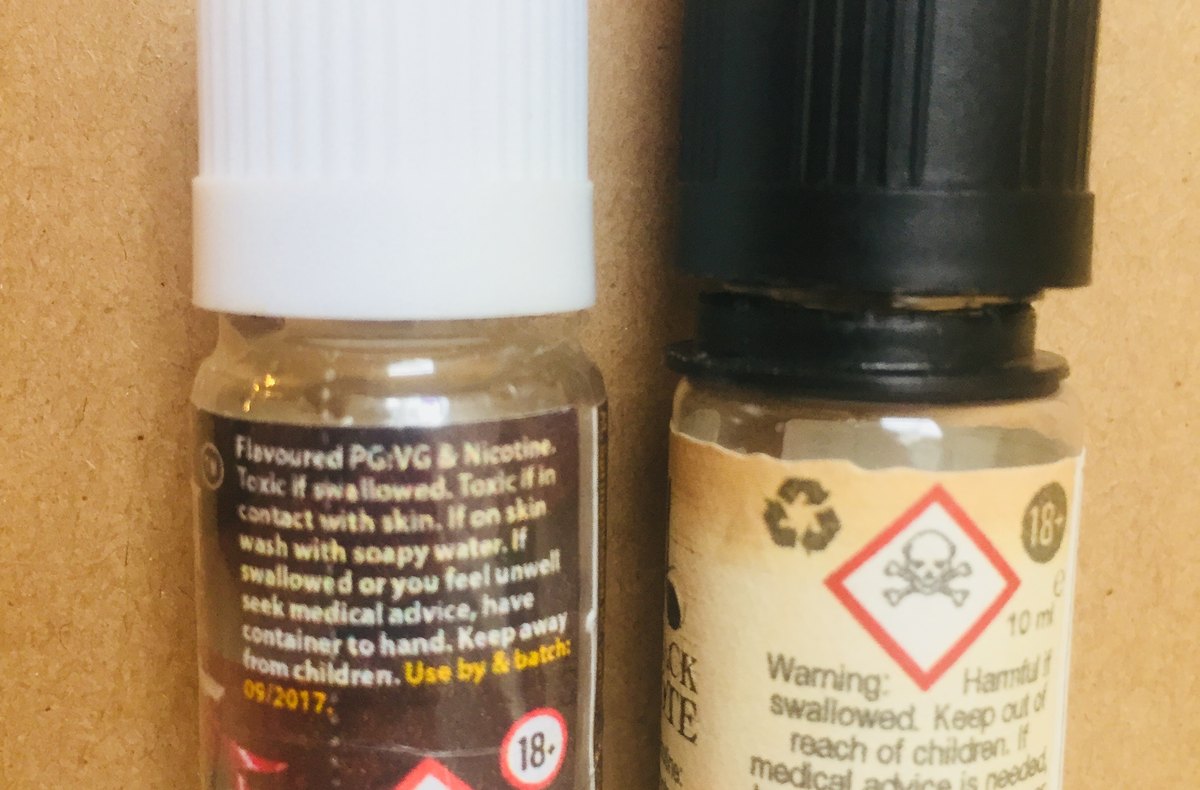
- Bottle warnings and expiration information
Keep nicotine liquid sealed and away from children and pets. If exposure or poisoning is suspected, contact Poison Control in the United States at 1-800-222-1222 or seek emergency help.
For hardware matching, read PG vs. VG and MTL vs. DTL.